Hazardous WEEE Treatment: Authorisation Requirements
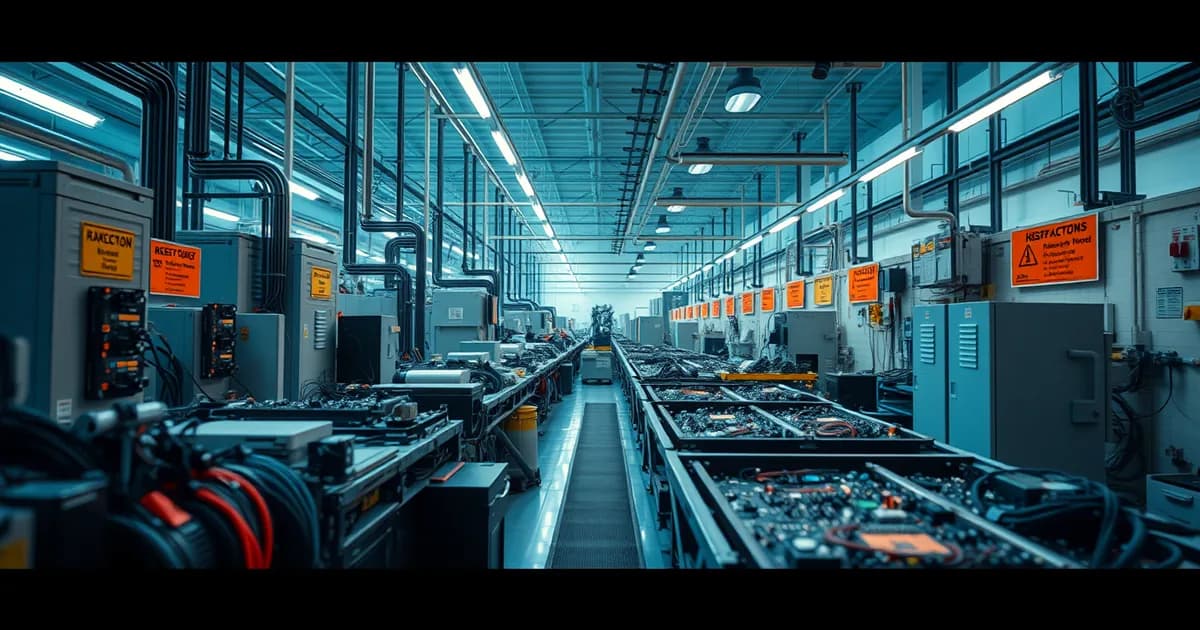
For anyone running a recovery plant or coordinating an industrial chain that intercepts discarded equipment, the treatment of hazardous WEEE is today one of the most sensitive issues on both the regulatory and operational front. Refrigerators, air conditioners, cathode-ray-tube monitors, batteries and circuit boards contain substances that, if mishandled, expose the company to penalties, plant downtime and reputational damage. Italy's Legislative Decree 49/2014, which transposed the European directive on waste electrical and electronic equipment, sets a clear principle: plants must operate using the best available techniques and obtain specific authorisations. For decision makers this is not a mere bureaucratic formality but a competitive lever. Understanding the authorisation perimeter allows leaders to plan investments, reduce litigation risk and hold position in a growing market, turning a compliance obligation into a positioning factor.
Why hazardous WEEE treatment demands dedicated authorisations
Not all electronic waste carries the same level of risk. A significant share of WEEE is classified as hazardous because it contains refrigerant and blowing gases, oils, mercury, lead or other regulated substances. The treatment of hazardous WEEE follows the logic of so-called adequate treatment: minimising the hazardousness of the waste and ensuring the highest technically feasible recycling rate for internal components. This is precisely why the law requires such operations to be carried out only by authorised operators, with verified plant equipment and skills. Treating hazardous fractions without the correct qualifying title is not a formal slip; it is an activity that falls within the sanctioning regime of the national environmental code.
The authorisation framework: article 208 and IPPC
The main reference is article 208 of Legislative Decree 152/2006, which governs the single authorisation for new disposal and recovery plants, including those handling hazardous waste. The operator submits an application to the competent Region, attaching the definitive project and technical documentation; the authorisation, usually granted for ten years and renewable, defines operating conditions and is notified to the National Register of Environmental Managers. For larger or higher-category plants, the Integrated Environmental Authorisation (IPPC/AIA) may apply, consolidating environmental-impact profiles into a single title. The choice between the two paths depends on the nature and capacity of the plant, but in both cases the release is conditional on adopting the best available techniques.
Technical requirements for plants (Annex VIII)
Legislative Decree 49/2014 sets out, in Annexes VII and VIII, respectively the management procedures and the technical requirements for plants. A site dedicated to the treatment of hazardous WEEE must be equipped according to the specific flow of discarded equipment and must identify and manage the hazardous components that need to be removed before subsequent treatment stages. Recurring requirements include impermeable surfaces with spillage-collection systems, adequate covering for exposed areas, dedicated storage zones and systems to contain effluents and leachate. The aim is to prevent hazardous substances from contaminating soil, water or air during the delivery, safety-preparation and dismantling phases.
Managing hazardous fractions: gases, CRTs and batteries
Handling critical fractions is the operational core of compliance. All refrigerant and blowing gases of any kind, including CFCs, hydrocarbons and ammonia, must be extracted and managed without release into the atmosphere; in the case of refrigeration circuits, any damage that could disperse refrigerants or oils must be avoided. Cathode-ray-tube monitors require controlled removal of fluorescent coatings, while batteries, capacitors and boards must be separated and routed to dedicated chains. A well-designed plant structures these operations into traceable sequences, with consistent waste codes and records that make it possible to demonstrate, during an audit, the correct management of each fraction.
Personnel, traceability and the environmental managers register
Technology alone is not enough. Plants must ensure qualified, trained personnel able to handle hazardous waste while avoiding environmental releases and to promptly activate emergency procedures. On the subjective side, the activity presupposes registration with the National Register of Environmental Managers for the relevant categories, while flow traceability now relies on the digital recording tools required by current legislation. The combination of authorisation, technical requirements, skills and traceability defines the perimeter within which treatment can be considered fully compliant.
For the industrial decision maker, mastering the requirements of hazardous WEEE treatment means far more than avoiding penalties. It means being able to access a market where demand for qualified management grows in step with digitalisation and European regulatory pressure. A solidly authorised plant, equipped with the best available techniques and able to document every step, becomes a reliable partner for producers subject to extended responsibility and for supply chains seeking compliance guarantees. In a sector where regulatory risk is real, those who structure their compliance early do not merely endure the rules: they turn them into a distinctive element of their value proposition.