Recovering Cobalt and Lithium from Batteries in 2026
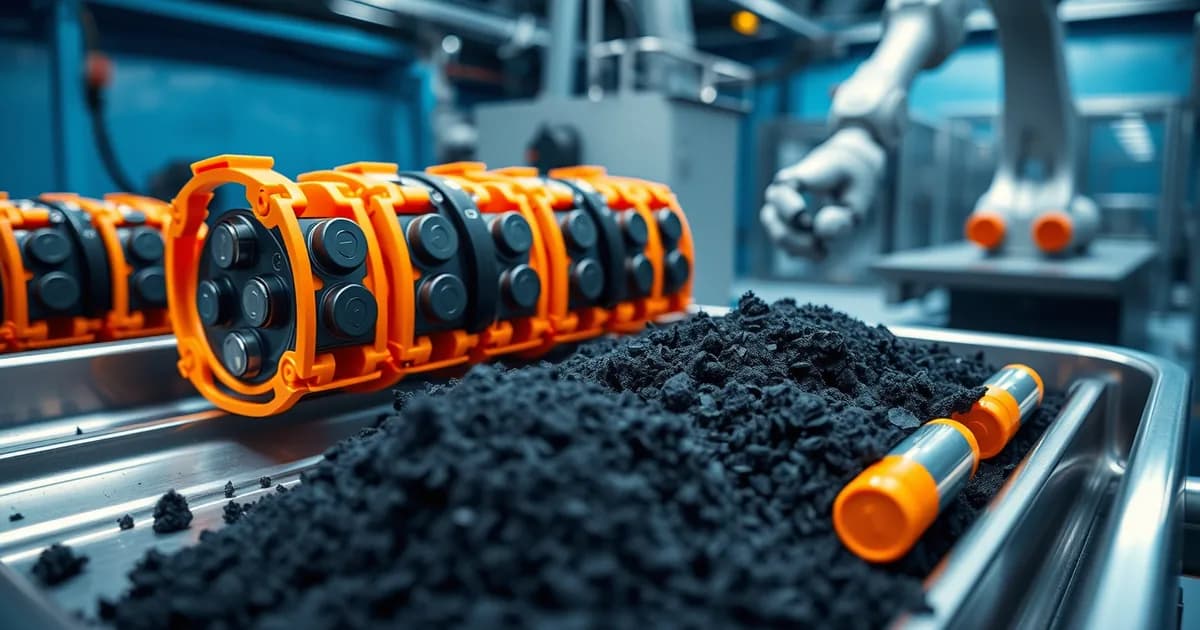
Lithium and cobalt rank among the most contested critical raw materials in the world: they power the batteries inside smartphones, laptops, power tools and electric vehicles, yet Europe imports nearly all of its supply from a handful of third countries. For industrial decision makers and sustainability leads, this is a concrete supply-chain risk, not just an environmental talking point. Cobalt and lithium battery recovery is moving, in just a few years, from a niche activity to a strategic lever for the resilience of electronics and electrical supply chains. The EU battery regulation, in force since 2024, sets rising recycling targets and minimum recycled-content requirements for new products, pushing manufacturers and end-of-life operators to build recovery processes that are more efficient, traceable and compliant. Companies that build a solid collection and treatment chain now will be ahead once these regulatory obligations start to bite.
Why cobalt and lithium recovery has become a priority
Lithium-ion cells, particularly the cobalt- and nickel-oxide chemistries used in consumer electronics, pack a disproportionate amount of economic and strategic value into just a few grams of material. Cobalt remains a geopolitically exposed material because extraction is concentrated in a handful of regions, while lithium sits at the center of the electric transition and the energy storage industry. For companies handling professional e-waste, end-of-life devices or industrial returns, intercepting these batteries before they end up scattered across generic waste streams turns a disposal cost into a high-value secondary raw material stream.
EU Regulation 2023/1542 and the recycling obligations
The relevant regulatory framework is EU Regulation 2023/1542 on batteries and waste batteries, in force since 18 February 2024, which replaces the previous directive and introduces obligations across the entire product lifecycle: design, labeling, traceability and end of life. On the recycling side, the regulation sets material recovery targets from waste batteries that become progressively more ambitious: for lithium the bar is set at 50% by 2027 and 80% by 2031, while for cobalt, copper, lead and nickel the targets are 90% by 2027 and 95% by 2031. The text also introduces minimum recycled-content thresholds for new batteries placed on the market, which will rise progressively in the years following the regulation's entry into force. For businesses, this means cobalt and lithium battery recovery is no longer just a circular-economy opportunity — it is a requirement that will increasingly show up in supply contracts and technical specifications.
Recovery technologies: hydrometallurgy, pyrometallurgy and greener processes
From a technical standpoint, recovering cobalt and lithium from spent batteries mainly relies on two process families. Pyrometallurgy treats cells at high temperature in a furnace, efficiently recovering cobalt, nickel and copper as a metal alloy, but with lower efficiency on lithium, which tends to be lost into the slag. Hydrometallurgy, by contrast, mechanically shreds the cells, physically separates the materials, and then chemically leaches the resulting "black mass" — the active material containing the metals — with acids or organic-based solutions, allowing cobalt, nickel, manganese and lithium to be recovered separately at high purity. In recent years, lower-impact hydrometallurgical processes have also emerged, replacing part of the traditional chemical reagents with organic acids derived from agricultural by-products, cutting energy demand and the volume of effluents to treat. The choice between the two routes, or a hybrid of both, depends on the volumes processed, the chemical composition of the incoming batteries, and the market value of the metals to be recovered at any given time.
The Italian picture: collection rates and room for improvement
On the collection side, Italy still shows a significant gap compared with its European peers and with EU targets. In 2025 the collection rate for spent portable batteries stood at just 31%, against 46% in Spain, 50% in France and 55% in Germany, versus an EU target of 73% to be reached by 2030. Erion, Italy's leading extended producer responsibility system for e-waste and batteries, managed more than 5,300 tonnes of battery waste in 2025 through its Erion Energy consortium, sending about 83% of it to recycling and recovering ferrous metals, lead, zinc and aluminium. A significant share of spent batteries, however, remains trapped inside small household appliances collected as e-waste, never removed upstream — a logistics and awareness problem more than a technological one, and an immediate improvement opportunity for anyone running treatment plants or collection points.
Operational challenges: material quality and traceability
Beyond regulation, the most concrete operational challenge for anyone investing in cobalt and lithium battery recovery is the quality and traceability of incoming material. Mixed-chemistry batteries, damaged cells or improperly labeled units increase safety risks during storage and processing and reduce the purity of the materials recovered downstream. This is why the most advanced facilities are integrating automated cell-chemistry identification systems, differentiated storage protocols for thermal risk, and digital traceability platforms that document a battery's journey from collection through to the recycled material re-entering production — a documentation and transparency requirement the EU regulatory framework will make increasingly strict over time.
The competitive edge of moving now
Companies that build solid collection, sorting and treatment processes for spent batteries today are positioning themselves on two fronts at once: reducing their exposure to critical raw material price volatility, and getting ahead of regulatory requirements that will become mandatory in the coming years. The still-wide gap between Italy's collection rates and EU targets is, in effect, a measure of the opportunity for whoever is first to capture end-of-life battery flows with efficient plants and traceable supply chains. Treating cobalt and lithium recovery not as a compliance cost but as a strategic sourcing lever is the shift in perspective that, over the next investment cycles, will separate companies that merely comply with regulation from those that turn it into a competitive a